Know Thyself (The Business Version)
Socrates had one piece of advice: know thyself. Twenty-five hundred years later, it's still the hardest thing to do. For people and for businesses.
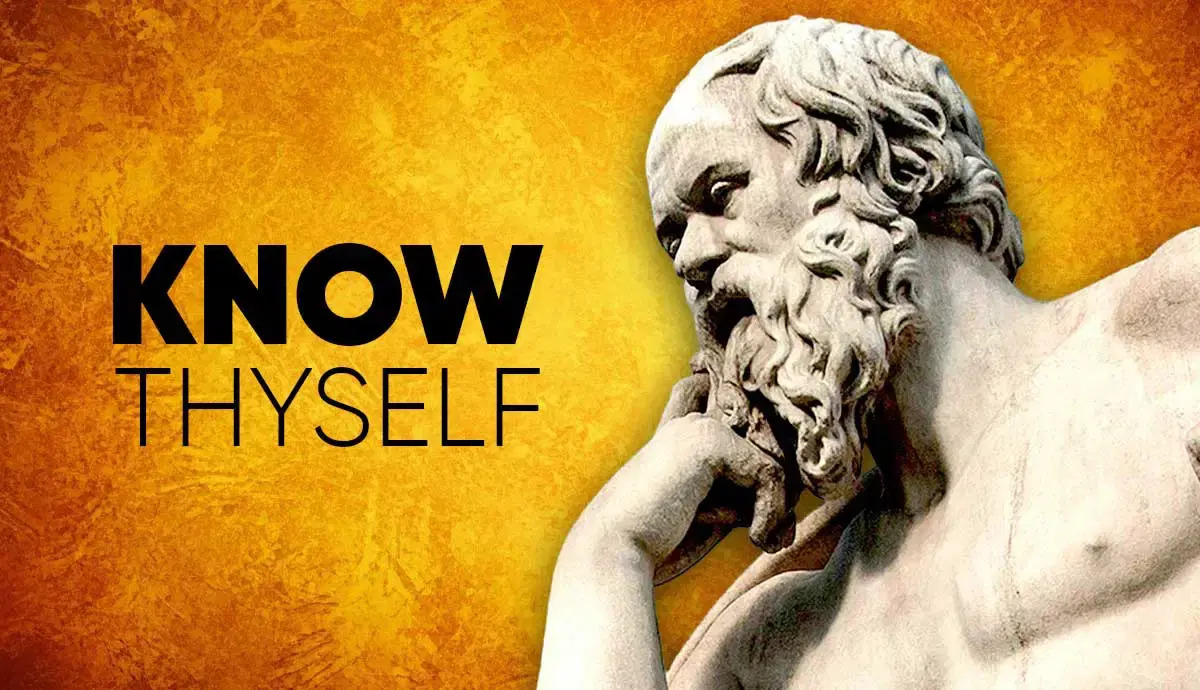
Socrates had one piece of advice: know thyself.
Twenty-five hundred years later, it's still the hardest thing to do. For people and for businesses.
Most brands don't know themselves. They don't know who actually buys their product. They don't know why those people buy. They don't know what message resonates or which audience is most valuable or what season drives their growth.
They think they know. They have assumptions. They have hunches. They have what the founder believed three years ago when they launched.
But they don't actually know.
And that ignorance is the most expensive thing in their business.
The Illusion of Knowledge
Here's what's strange: the more successful a brand gets, the less they tend to know about themselves.
In the early days, founders are close to customers. They answer support tickets. They read every review. They talk to buyers directly. They have real understanding because they're in the trenches.
Then the business grows. The founder steps back. Teams get built. Layers get added. The distance between decision-makers and customers increases.
The business keeps scaling, but on momentum. On what worked before. On assumptions that haven't been tested in years.
The founder still feels like they understand the customer. But that understanding is frozen in time. It's based on who was buying two years ago, not who's buying today.
Meanwhile, the market shifts. The audience evolves. New competitors emerge. The message that built the business stops working, and nobody knows why.
This is how brands hit ceilings. Not because they run out of customers, but because they run out of self-knowledge.
What Self-Knowledge Actually Means
For a business, knowing thyself means understanding three things:
- Who buys from you. Not who you think buys. Not who you want to buy. Who actually pulls out their credit card and makes a purchase. What are their demographics? Their psychographics? Their life situation when they decide to buy?
- Why they buy. Not the features they use. Not what they say in surveys. The actual motivation that drives the purchase. The problem they're solving. The emotion they're feeling. The trigger that moves them from considering to buying.
- When they buy. Not just the calendar seasonality — though that matters too. The moment in their life when your product becomes relevant. The circumstance that creates the need.
Most brands can answer these questions with guesses. Few can answer them with evidence.
The Cost of Not Knowing
Ignorance has a price, but it's invisible.
You can see what you spend on ads. You can see your cost per acquisition. You can see your revenue and your margins.
You can't see the customers you're not reaching because you're talking to the wrong audience. You can't see the sales you're losing because your message doesn't resonate. You can't see the growth you're missing because you haven't discovered the segment that would scale.
The cost of not knowing doesn't show up on any report. It shows up as a ceiling you can't break through. As a plateau you can't explain. As a feeling that something's not working but you don't know what.
And because you can't see it, you don't fix it. You try more ads. You try new creatives. You try different agencies. You throw volume at the problem.
But volume can't solve an ignorance problem. Only knowledge can.
The Compounding Effect
Here's why self-knowledge is a moat: it compounds.
Every insight you gain about your customer builds on the previous insight. You learn who buys. Then you learn why they buy. Then you learn what triggers them to buy. Then you learn what makes them buy again.
Each layer of understanding makes the next layer easier to find. And each layer makes your marketing more effective.
A brand that truly knows its customer can write better ads, build better landing pages, create better products, and craft better offers. Not because they're more creative, but because they're not guessing.
Meanwhile, a competitor who doesn't know their customer is still throwing darts blindfolded. They might get lucky sometimes. But luck doesn't compound.
Over time, the gap widens. The brand with self-knowledge gets more efficient every month. The brand without it stays stuck, cycling through agencies and strategies, never building on what came before.
Why Brands Don't Know Themselves
If self-knowledge is so valuable, why don't more brands have it?
Three reasons.
- First, it requires admitting you might be wrong. Most founders have strong beliefs about their customer. Those beliefs are tied to their identity, their origin story, their sense of what they've built. Discovering that your assumptions were wrong means confronting the possibility that you've been doing it wrong for years. That's uncomfortable.
- Second, it requires looking at data you might not like. What if the data shows that your favorite customer segment isn't actually your best customer segment? What if the message you're proud of doesn't resonate? What if the product positioning you've invested in is wrong? Some brands would rather not know than face an uncomfortable truth.
- Third, it requires discipline over time. Self-knowledge isn't a one-time project. It's an ongoing practice. You have to keep testing, keep learning, keep updating your understanding as the market evolves. Most brands don't have the systems or the patience for that.
So they operate on assumptions. They guess. They copy competitors. They do what they've always done.
And they wonder why they can't break through.
The Testing Paradox
Here's the paradox: brands are constantly running ads, but they're not learning anything.
They test new creatives every week. They try different formats. They experiment with copy and imagery and calls to action.
But they're testing tactics, not hypotheses.
Testing a tactic tells you whether this specific ad worked. It doesn't tell you why. It doesn't tell you who it worked for. It doesn't tell you whether the insight generalizes.
Testing a hypothesis tells you something about your customer. It builds understanding that applies beyond this one ad.
A brand that tests tactically might discover that Ad #47 outperformed Ad #48. Cool. What do they do with that information? Make more ads like #47? What made #47 work? They don't know, because they never isolated the variable.
A brand that tests strategically might discover that their audience responds more to urgency than to aspiration. That insight applies to every ad, every email, every landing page. It compounds across everything they do.
Same amount of ad spend. Completely different outcomes.
Facebook as a Mirror
Facebook is the greatest self-knowledge tool ever created for businesses.
You can reach billions of people. You can show them anything. You can see exactly how they respond.
Every ad is a question. Every click is an answer. Every purchase is proof.
Most brands use Facebook to sell. They optimize for conversions. They chase ROAS. They treat it as a revenue channel.
That's fine. But it's also a missed opportunity.
Facebook can teach you who your customer really is. You just have to ask the right questions.
Instead of testing which ad drives more sales, test which audience responds. Instead of testing which headline converts better, test which message resonates with which segment.
Use your ad spend to buy understanding, not just transactions. The transactions are a bonus. The understanding is the moat.
What Self-Knowledge Looks Like
When a brand truly knows itself, you can tell.
They can describe their customer with specificity. Not "health-conscious women 25-45" but "first-time moms who are worried about what they're putting in their kids' bodies, usually buying during the 2 AM feeding when they're anxious and scrolling."
They can explain why that customer buys. Not "they like our product" but "they're overwhelmed with choices, scared of making the wrong decision, and our messaging gives them permission to stop researching."
They can identify the moment that triggers purchase. Not "they see our ad and buy" but "something happens — a pediatrician comment, a friend's recommendation, a scary article — that makes the problem feel urgent, and then they're ready to hear our message."
This level of specificity doesn't come from intuition. It comes from rigorous testing and honest observation.
Building Self-Knowledge
How do you actually build this?
Start with what you know. Look at your data. Who's actually buying? When? What do your reviews say? Your support tickets? Your ad comments? Mine the evidence you already have.
Form hypotheses about what you don't know. Based on the patterns you see, what might be true that you haven't validated? Who else might be buying? What other motivations might exist?
Test the hypotheses systematically. Don't just run ads — design experiments. Isolate variables. Answer specific questions. Build understanding over time.
Document what you learn. Create a record of validated insights. Write down what you know about your customer and why you know it. Make it accessible to everyone in the organization.
Keep updating. The market changes. Your customer evolves. Self-knowledge isn't a destination; it's a practice. Last year's insights might be outdated. Keep testing.
The Moat That Can't Be Copied
Competitors can copy your ads. They can copy your landing pages. They can copy your offers. They can hire your creative team.
They can't copy what you know about your customer.
That understanding lives in your organization. It's embedded in your positioning, your messaging, your product decisions. It compounds over time in ways that can't be replicated.
A competitor can see what you're doing. They can't see why it works.
And if they try to copy without understanding, they'll get it wrong. They'll use the same format but miss the insight. They'll target the same audience but with the wrong message.
Self-knowledge is the moat that can't be stolen.
The Question to Ask
Here's the question I'd ask any brand:
If I asked you to describe your best customer — not your ideal customer, but the person who actually drives your business today — could you do it with specificity?
Could you tell me their situation? Their emotional state when they buy? The trigger that made them ready? The objection they almost had but overcame?
If you can, you have self-knowledge. You're building on something solid.
If you can't, you're guessing. You might be guessing well — successful businesses can run on good intuition for a while. But eventually, intuition hits a ceiling.
The brands that break through are the ones that replace guessing with knowing.
Know Thyself
Socrates gave that advice to individuals. It applies just as much to businesses.
The brands that win are the ones that understand themselves. Who buys from them and why. What resonates and what doesn't. Where growth comes from and where it's limited.
That understanding is the foundation everything else is built on. Without it, you're just guessing with a marketing budget.
The cost of making content is approaching zero. The cost of testing is cheaper than ever. The tools for understanding your customer are better than they've ever been.
The only question is whether you'll use them.
Know thyself. It's still the best advice.
